Latifa Echakhch
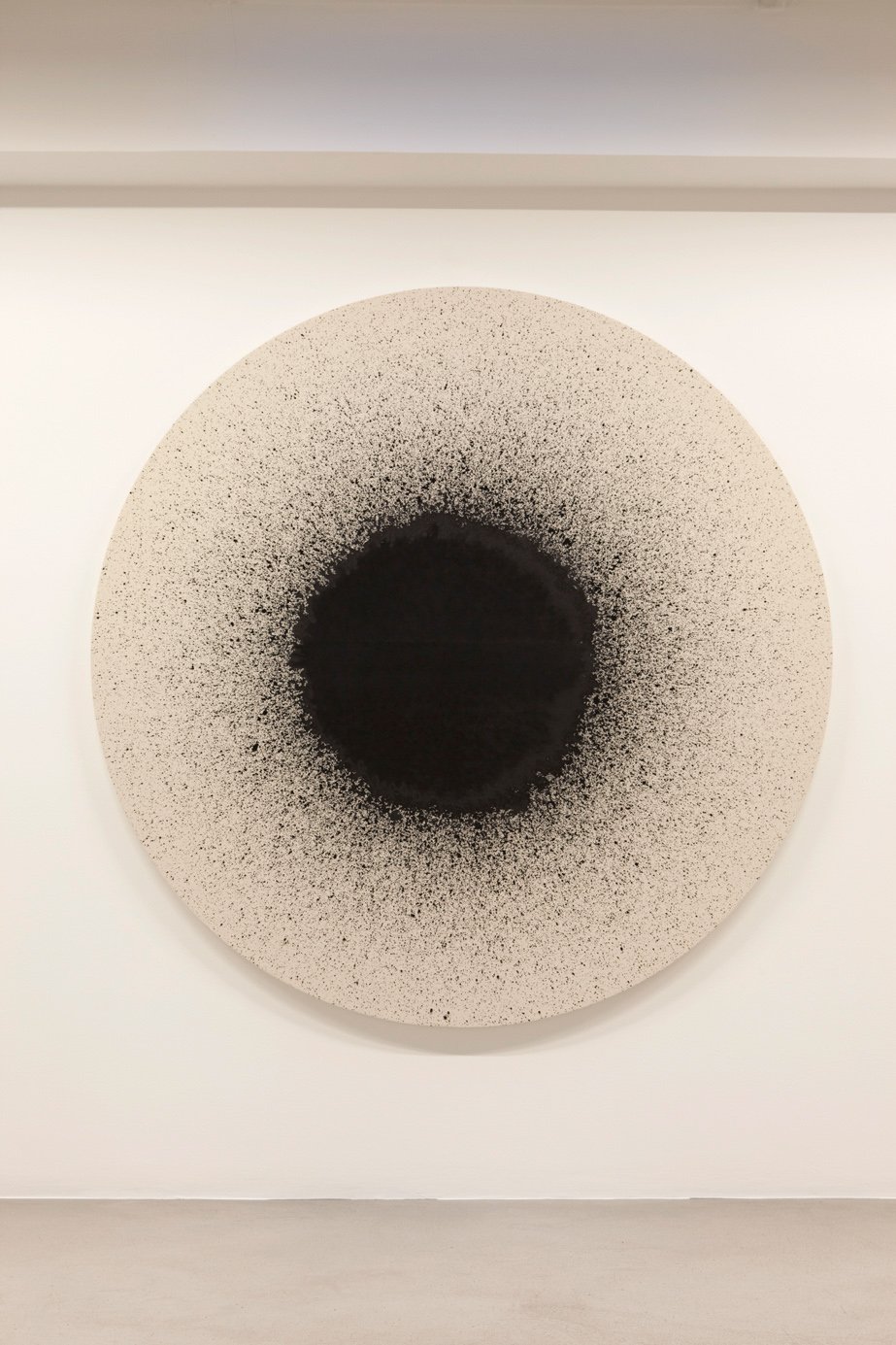
Underneath, 2017Paint, plaster and cement on canvasdiameter 173 cm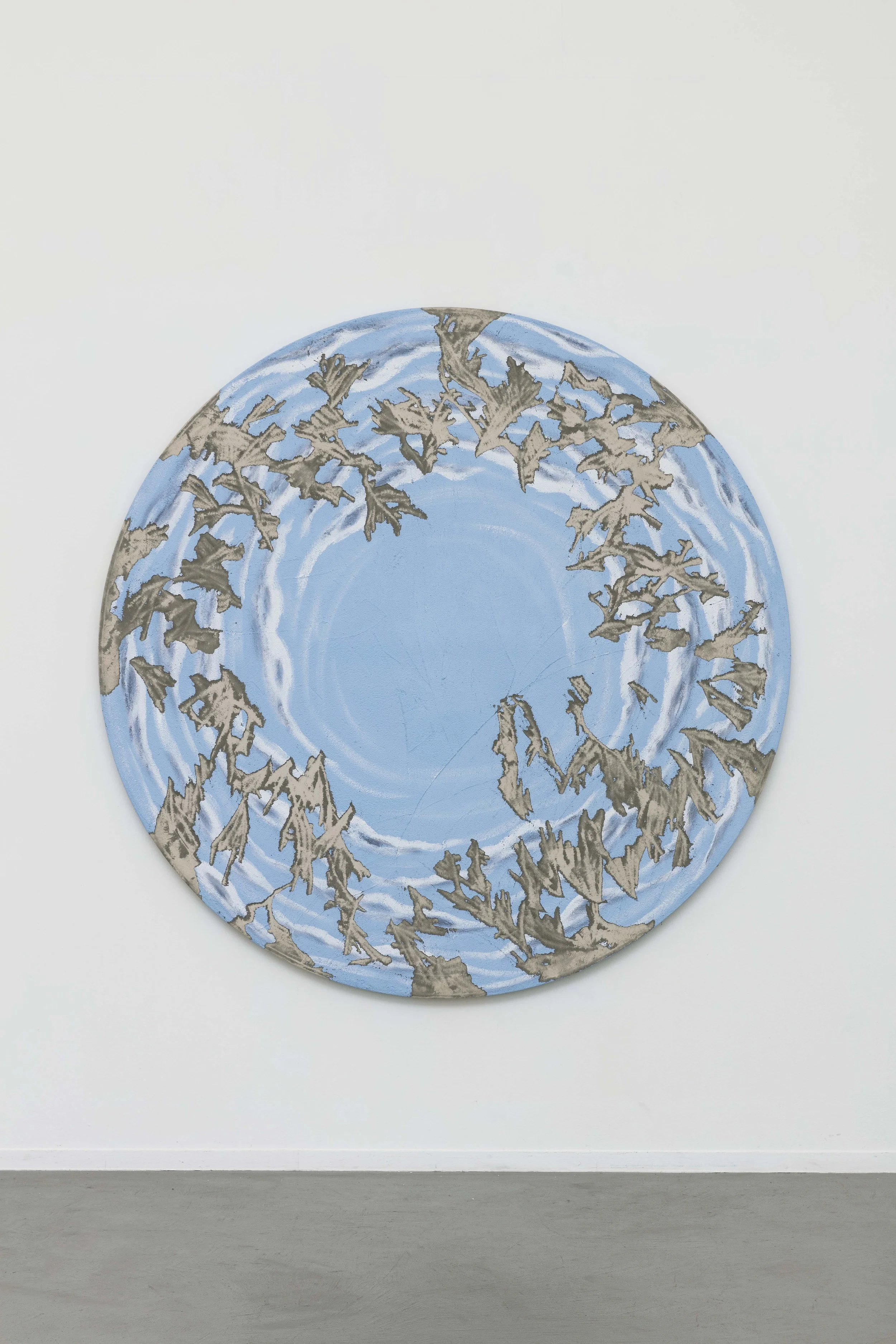
About the work
About the Work
Echakhch analyses cultural symbols and the layered nature of multicultural identity. By systematically peeling away layers of meaning, she attempts to reach an essential core. Each work thus becomes an exercise in reduction. She associates French identity with ornament, geometry and rigid systems, which she contrasts with disorder as a space of possibility. Through this form of deconstruction, she explores themes such as nationality, globalisation and cultural difference. For example, she removes the central sections of Islamic prayer rugs, leaving only their decorative borders.
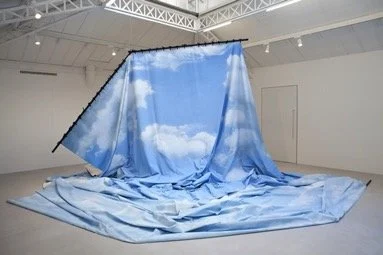
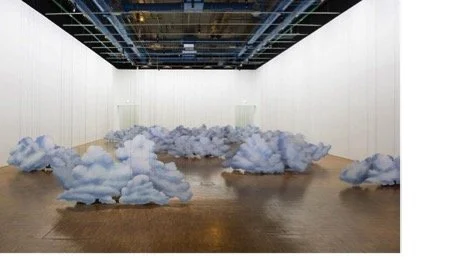
The sky first appeared as a visual motif in La Dépossession (2014). The work takes a collapsing theatre set as its point of departure and refers directly to the dismantling of spectacle and theatrical illusion. In a later installation in Toronto, however, the sky takes on material form: the celestial motif changes from an image into an object—an object that can also be destroyed. As a result, an element we see every day and take for granted loses its familiar stability.
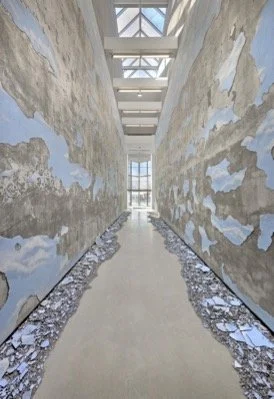
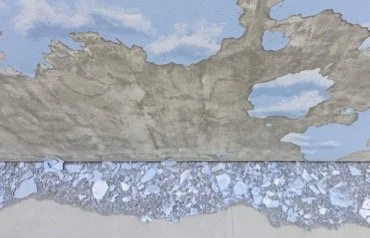
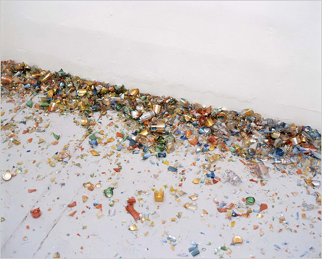
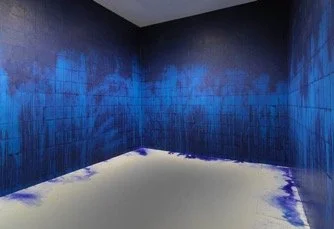
A recurring feature of Echakhch’s oeuvre is the way a mural extends across the floor. At the most recent Istanbul Biennial, she applied this principle in Crowd Fade (2017). She used a comparable approach in À chaque stencil sa révolution (2008), literally drawing the viewer into the work and allowing the traces of the artistic action to continue into the visitor’s space.
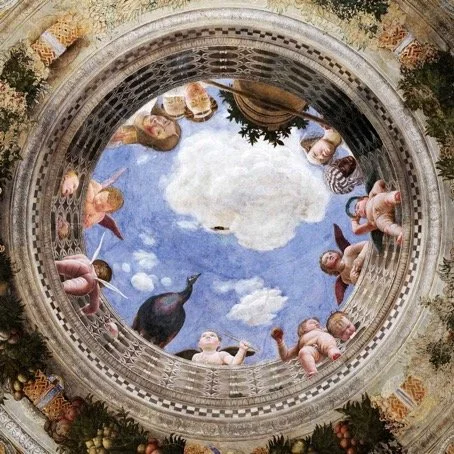
With the Underneath series, Echakhch returns to the tondo, a circular format originating in fifteenth- and sixteenth-century Italian art. Traditionally, this format was used for depictions of the Madonna and Child and for funerary monuments. She first used the form during her exhibition Tkaf (2012) at Galerie Kamel Mennour, where the works were titled Tambour.
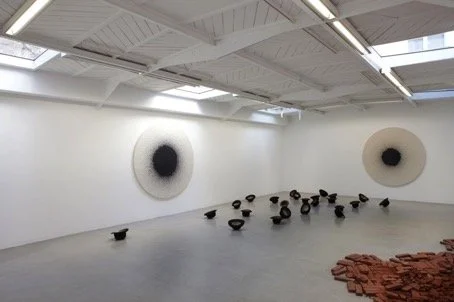
The Tambours reinterpret the traditional ceiling tondo, which once depicted a celestial sky. Instead, Echakhch allows drops of black ink, directed by gravity, to run across the canvas. The sky is transformed into a dark target, evoking memories of American Abstract Expressionism in the 1950s, particularly the work of Jackson Pollock.
In the Underneath series, however, the sky returns in a soothing azure blue. The works are executed in fresco and refer both to cultural memory and to the tondo’s historical symbolism as a sign of perfection. The Italian concept sotto in sù (‘from below upwards’) resonates in these works, in which the sky appears distorted, as though viewed through a peephole. An imaginary centrifugal force pushes the blue expanse of sky towards the edges of the circle, while the scraped and damaged fresco reveals the layers beneath—a second meaning of Underneath: ‘what lies below’.
The viewer is first calmed by the clear azure blue, then unsettled by a grey network of traces, and finally drawn back in by the visible signs of damage and tension. This symbolic collapse of the sky creates a sense of disorientation, confronting the viewer with the tangible, material reality of the artwork.
Latifa Echakhch
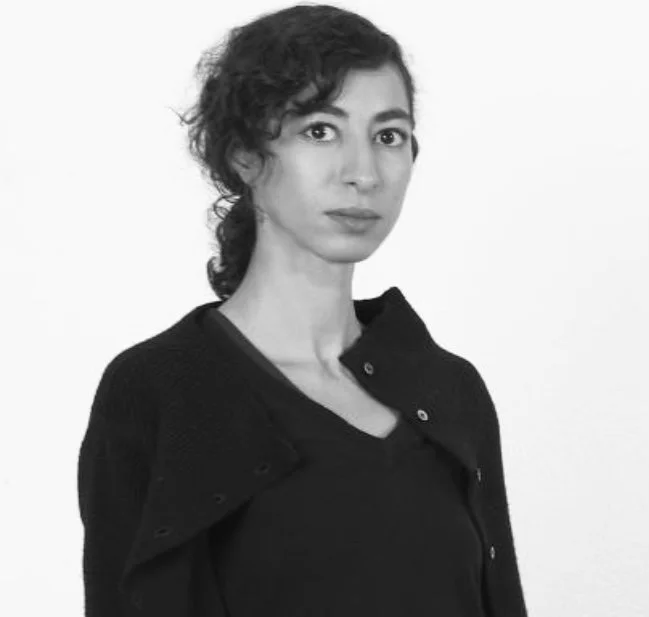
° in El Khnansa, Morocco. Lives and works in France.
Latifa Echakhch moved from Morocco to France at the age of three. In 2002, she graduated from the École des Beaux-Arts in Lyon.
She has been based in Switzerland since 2007, while regularly exhibiting in Europe, the Middle East and the United States.
Echakhch’s work stems from a fascination with systems and structures, although her artistic process remains intuitive and is only minimally planned in advance. Her series address major contemporary themes arising from reflections on her complex identity. She grew up with a traditional French education and felt entirely French. It was only after the 1995 Paris Métro bombing that she became aware of how others perceived her as ‘different’. This prompted her to re-examine her Moroccan heritage and gave her artistic practice a new direction.
Artist Talk
Portfolio