
Rebecca Morris
Untitled (#15-13), 2013 Oil on canvas302 × 246 cm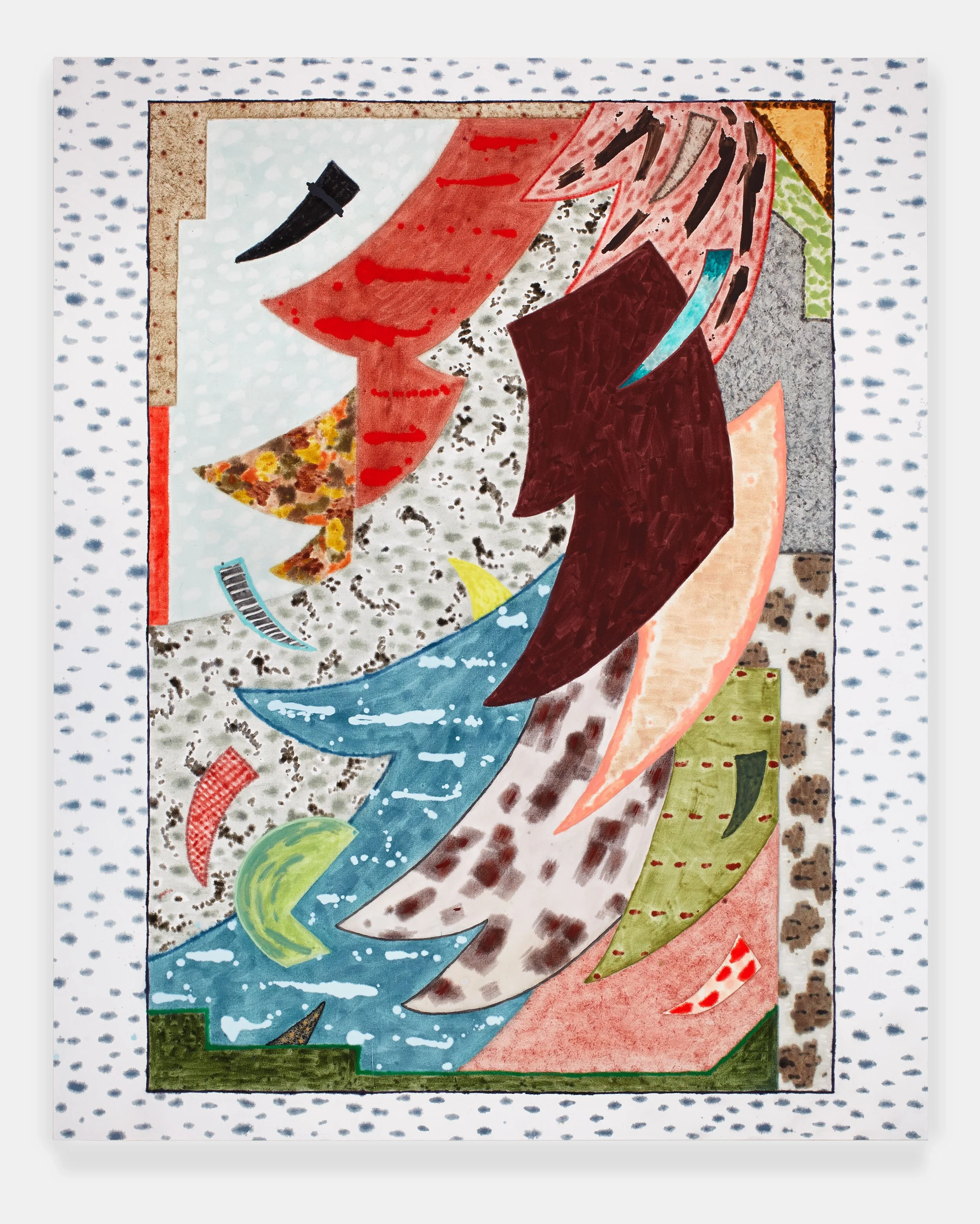
About the work
In Untitled (#15-13), Rebecca Morris brings together different painterly languages: splatters, washes, atmospheric fields of colour, loose grids and forms that appear to float independently across the image. The elements do not fit together in an obvious way, yet it is precisely this tension that gives the work its energy. Morris approaches painting as a process of continual rearrangement and regrouping. Mistakes and failures are part of that process. Rather than concealing them, she explores how they can be incorporated into the painting. In this way, she develops a distinctive and unconventional language for contemporary abstraction.
Morris does not seek to create a uniform painting style in which every element follows the same rules. On the contrary, she allows different techniques and visual languages to coexist. A grid may clash with a transparent wash; a sharply defined form may hover beside a loose, gestural mark. The painting thus becomes a place where divergent decisions come together temporarily. Her statement ‘Abstraction never left’ underscores her conviction that abstract painting is not a closed chapter in art history, but a living and continually evolving practice.
Rebecca Morris
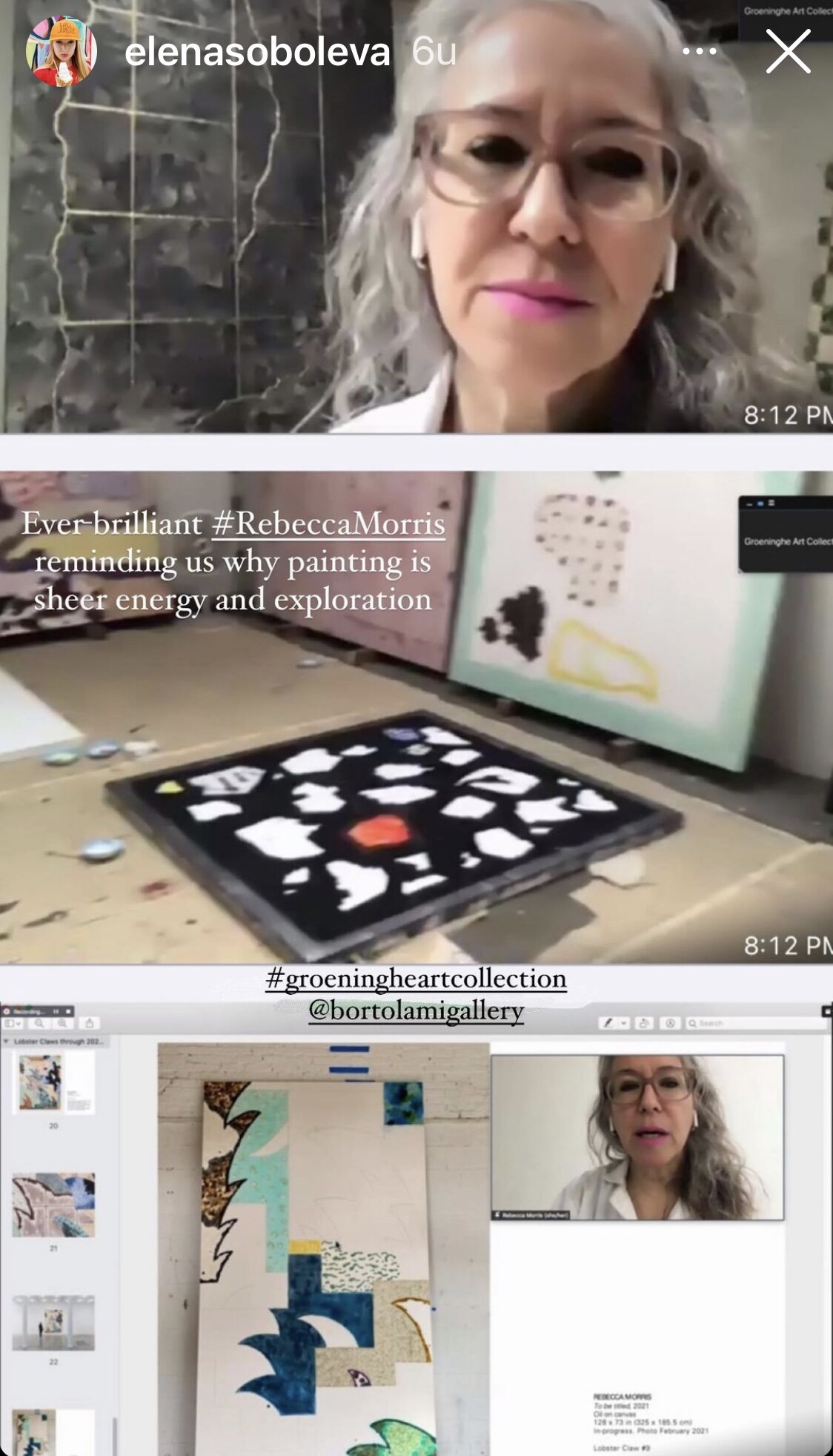
° 1969 in Honolulu, Hawaii, United States. Lives and works in Los Angeles.
Rebecca Morris received a BA from Smith College and an MFA from the School of the Art Institute of Chicago. After completing her studies, her work evolved from observational still lifes towards abstract painting. Morris is known for her outspoken defence of abstraction and for her large-scale canvases, which engage in dialogue with artists such as Frank Stella and Laura Owens.
Morris developed her abstract language after an education in which she initially also worked from observation. In 2004, she published the manifesto Abstraction Never Left, Motherfuckers, an emphatic defence of abstraction as a contemporary art form. Her large canvases engage with both modernist and contemporary painting. She regards painting as a dynamic process in which doubt, mistakes and regrouping are essential.