
Arthur Jafa
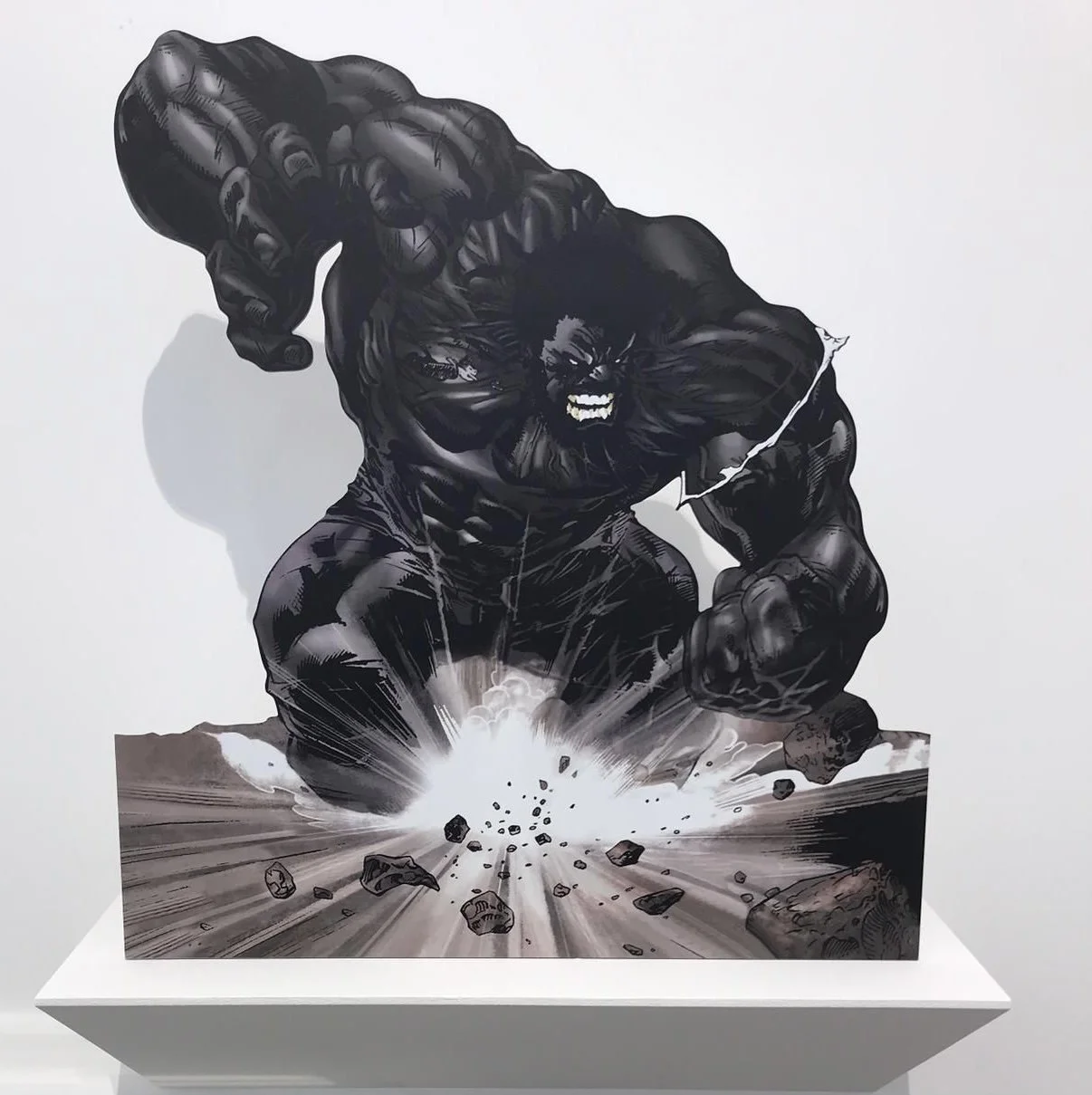
LeRage (small, 2018

Colour print on Dibond, stand made from aluminium plate
                                       70,5 × 65,1 × 18,1 cm
About the work
LeRage (small) (2018) forms part of Arthur Jafa's broader artistic practice, in which images and their meanings take centre stage.
The figure immediately recalls the Incredible Hulk, the green Marvel superhero who appears when Bruce Banner can no longer control his anger. Jafa transforms this familiar figure into a Black double, which can also be interpreted as a concealed self-portrait of the artist.
The title LeRage refers to the power of anger. As with the Hulk, this anger can be destructive, but it can also provide the energy needed to resist injustice.
In doing so, Jafa also refers to 'Black Rage', a concept explored in William H. Grier and Price M. Cobbs's 1968 book of the same name. It describes the anger and frustration arising from racism and oppression.
In LeRage, the Hulk thus takes on a new meaning: anger becomes not only an explosive force but also a form of resistance.
Jafa is a visual artist, film director and cinematographer. His experience with film and the moving image is central to the way he brings images together and examines them.
Over several decades, he has developed a body of work that is difficult to place within a single category. He combines images and narratives from widely differing contexts and backgrounds, exploring themes such as the history of the United States, violence, oppression and strategies for survival.
At the heart of his work is an investigation into a Black aesthetic, rooted in the experience of Blackness in contemporary America. Jafa examines how this experience relates to life, death and even the concept of the human.
He pays particular attention to the ways in which images are produced and circulated. His work focuses not only on photography and film, but also on music, sound and other time-based media.
For Jafa, the development of Black cinema and music in the twentieth and twenty-first centuries is crucial. He regards them both as cultural products and as ideological artefacts.
His working method is characterised by the continuous collection and recombination of images. By arranging them in dynamic compositions, he creates what the original text describes as cognitive maps. These can function as critiques of the past, but also as ways of considering future possibilities.
Jafa thus explores the power, beauty and contradictions of contemporary society, as well as the complexity of racial relations. His work explicitly reflects on white supremacy and anti-Blackness, and on the ways in which they remain embedded in our society and visual culture.
Arthur Jafa
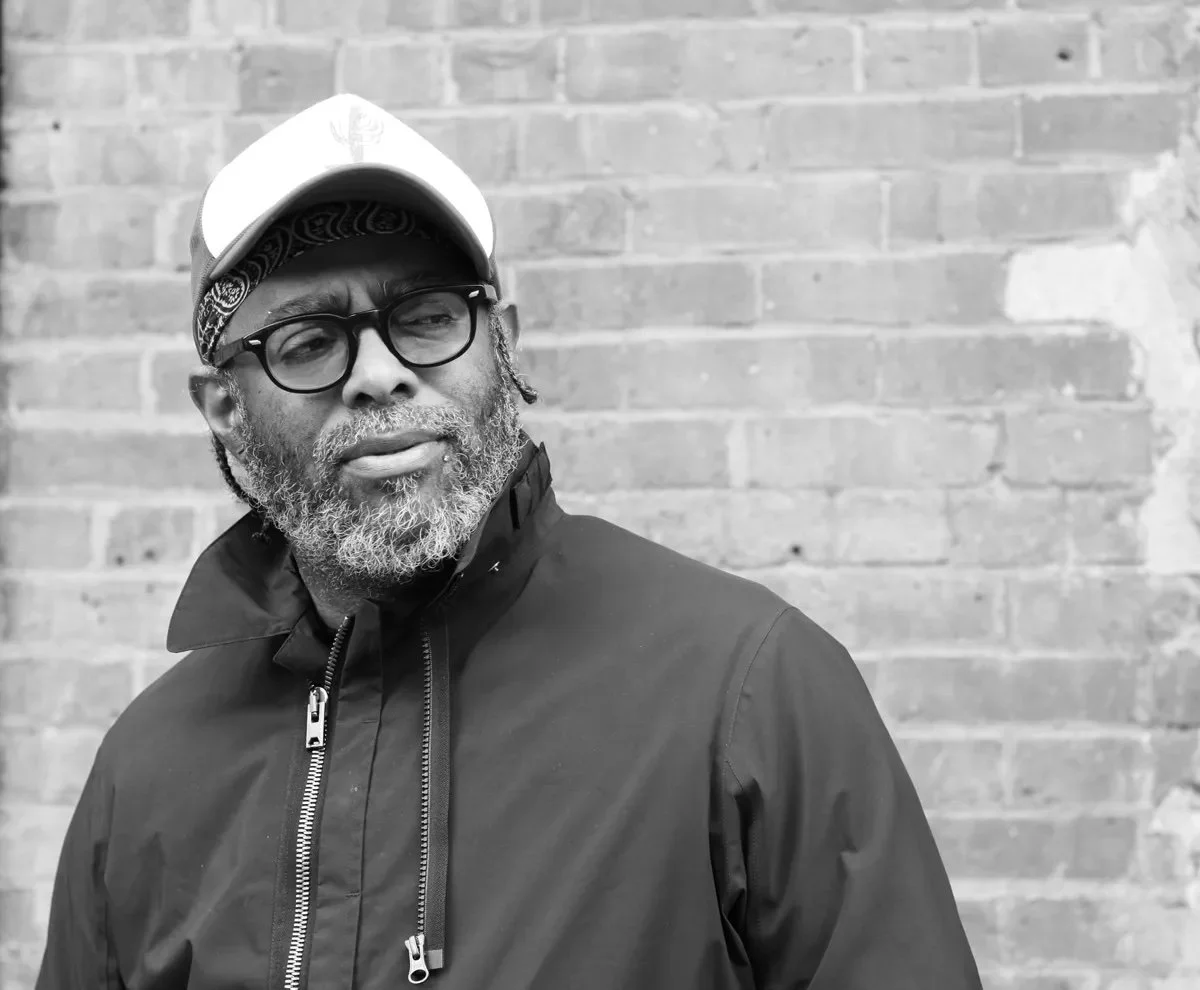
° 1960 in Mississippi. Lives and works in Los Angeles, United States.
Arthur Jafa is an American artist and filmmaker. Over the past three decades, he has developed a multifaceted practice encompassing films, objects and performances, through which he explores and questions different aspects of Black identity and experience.
Jafa's films have received awards and have been presented at film festivals in cities including Los Angeles and New York. His work is held in major international collections, including The Metropolitan Museum of Art and The Museum of Modern Art in New York, Tate, the San Francisco Museum of Modern Art, the Stedelijk Museum, the LUMA Foundation and the Smithsonian American Art Museum. In 2026, Fondazione Prada in Venice presents Helter Skelter: Arthur Jafa and Richard Prince.
Recent solo exhibitions have taken place at institutions including MCA Chicago, OGR Torino, the LUMA Foundation in Arles, Glenstone in Maryland, the Louisiana Museum of Modern Art, the Fundação de Serralves in Porto and Moderna Museet in Stockholm.
In 2019, Arthur Jafa received the Golden Lion for Best Participant at the 58th Venice Biennale, May You Live in Interesting Times.