Haroon Mirza
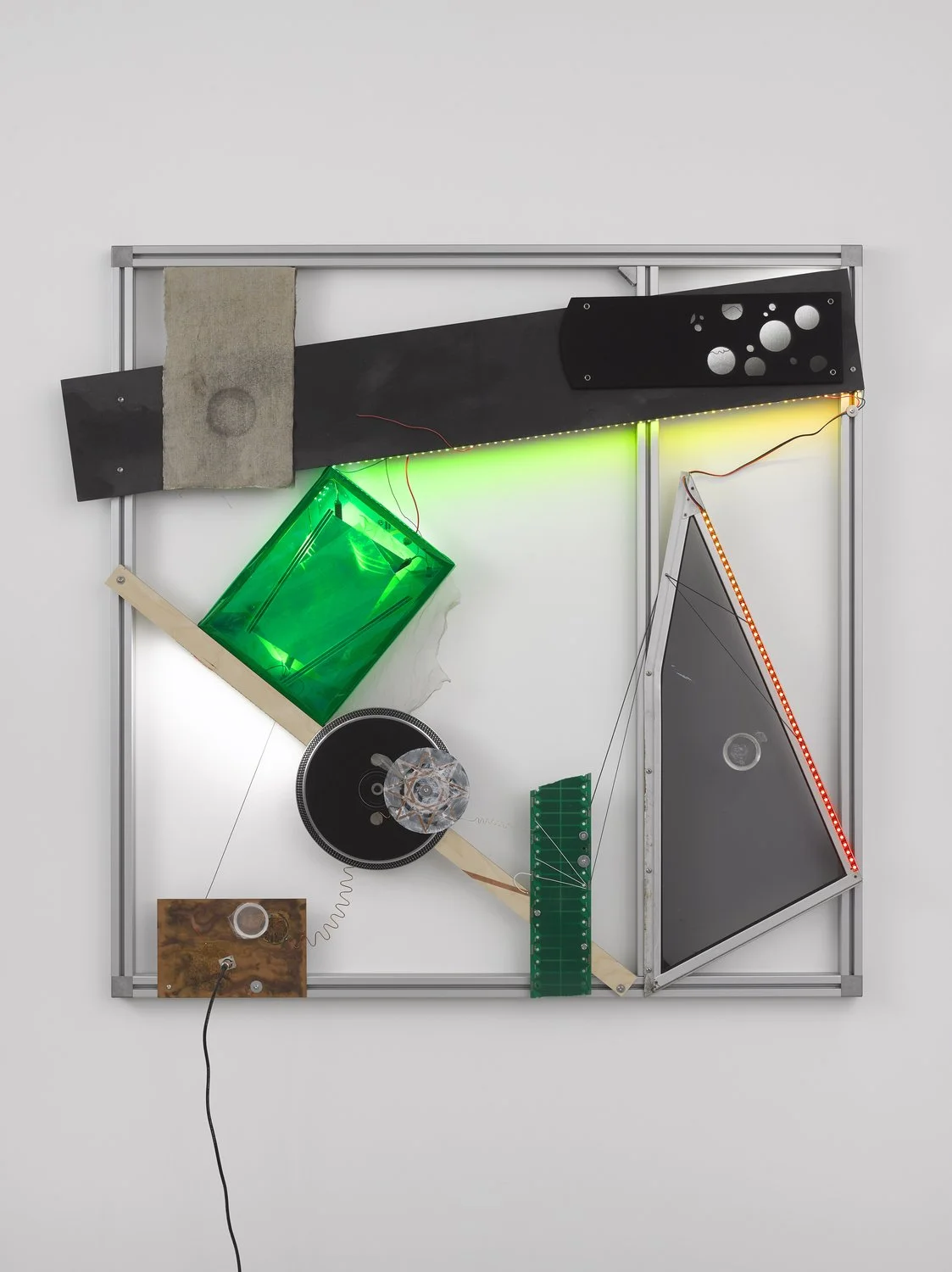
Decaying into a Pair (Solar powered LED composition 40), 2019Meteorite, gold leaf, addressable LEDs, wire, magnet wire, copper tape, acrylic, polyurethane resin and gel medium on photovoltaic panel152,4 x 167,6 x 3,2 cm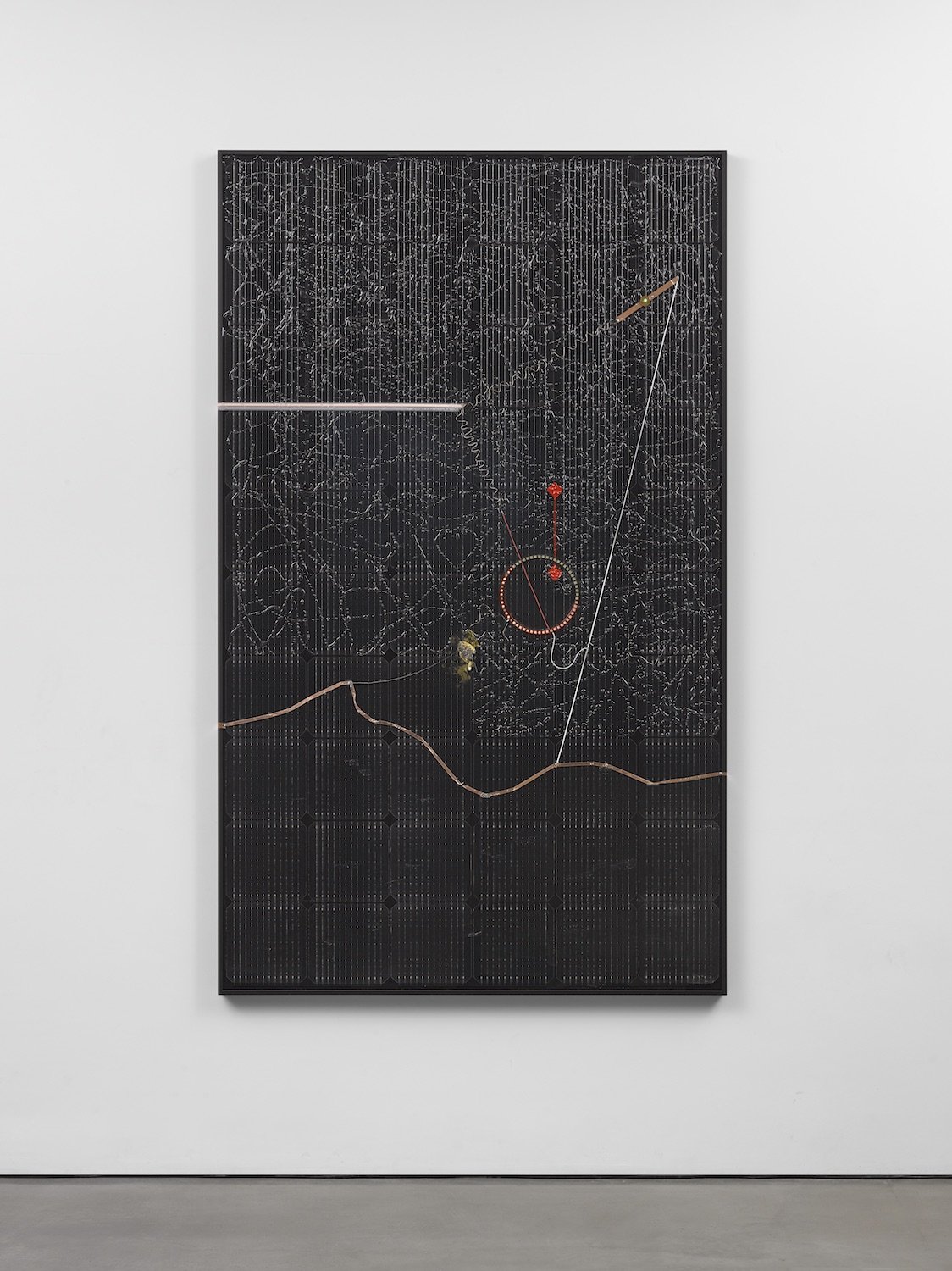
About the work
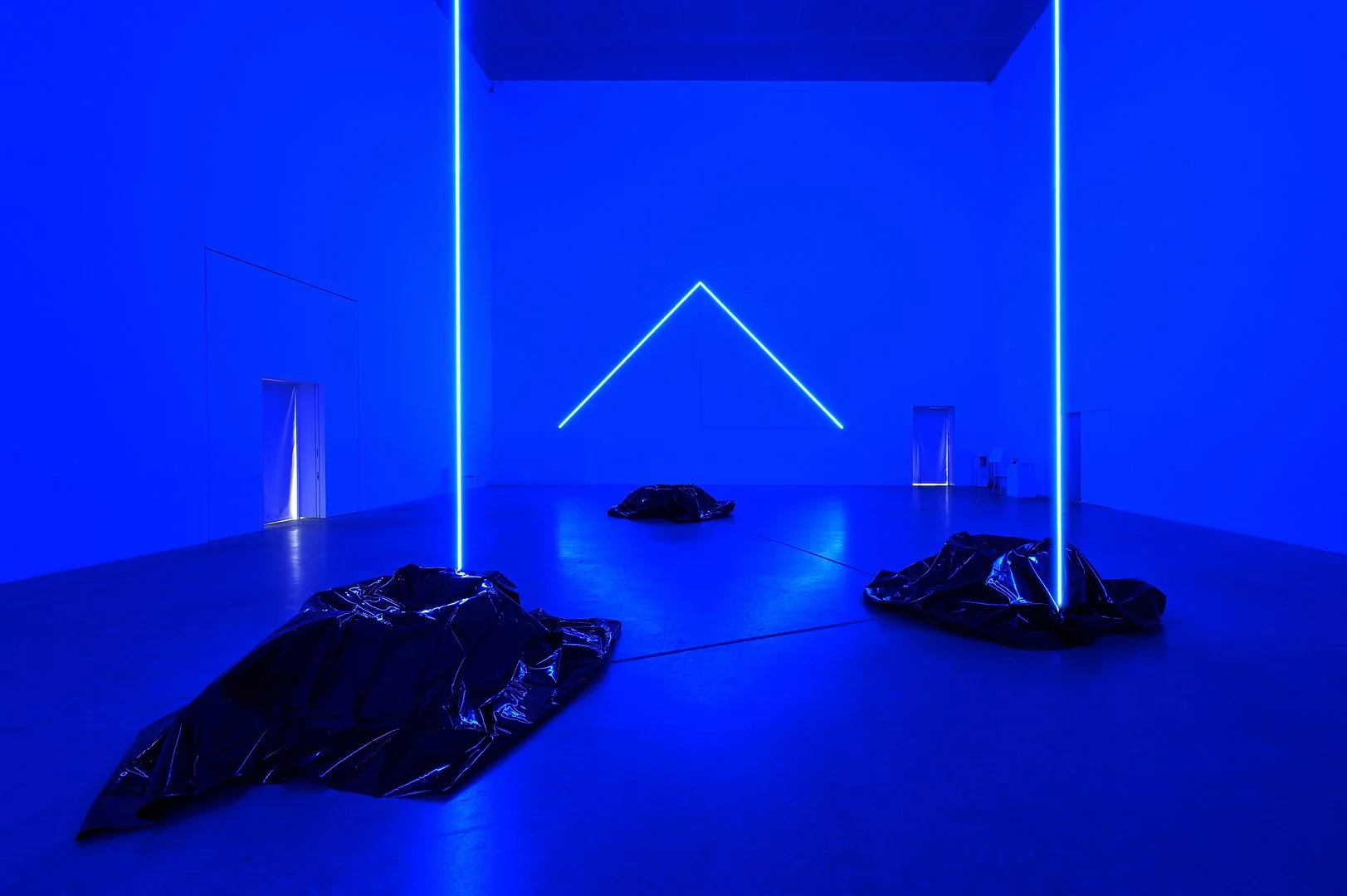
Haroon Mirza is known for his sculptures, performances and immersive installations, in which he explores the relationship between sound, light and the viewer in space.
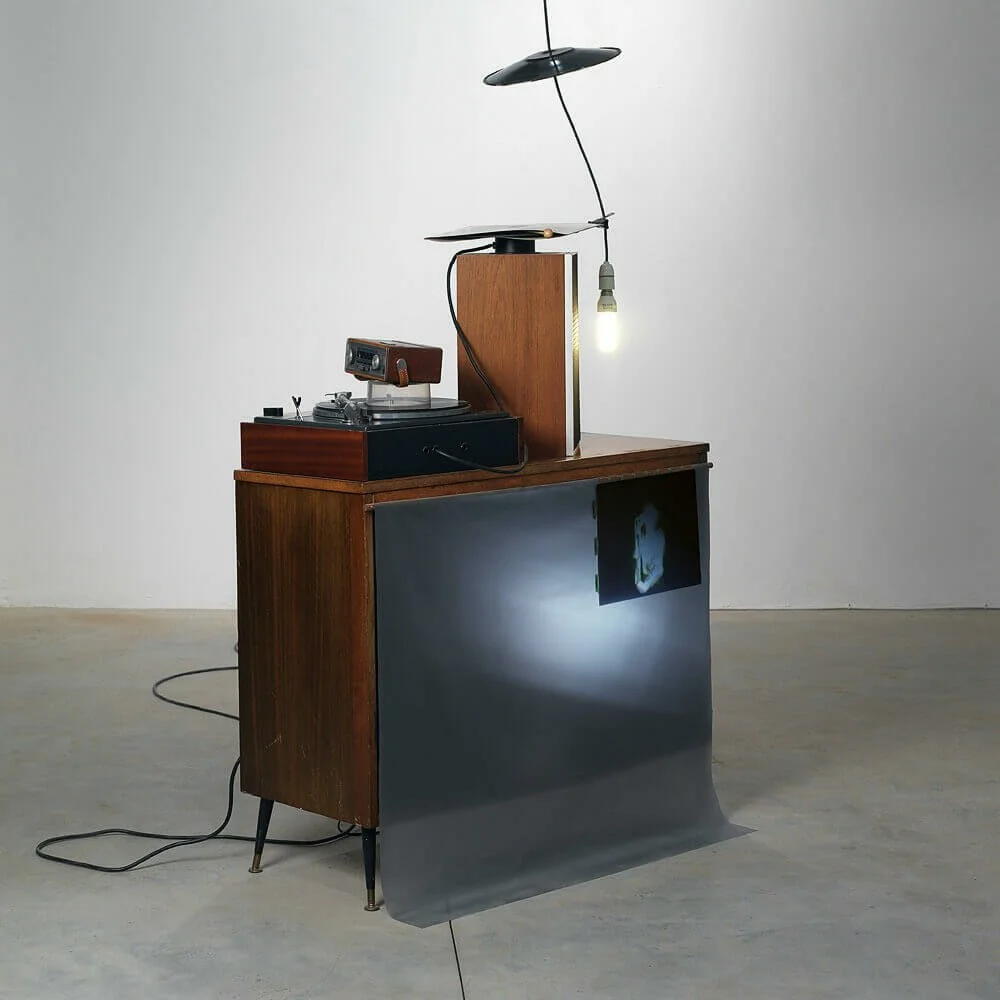
He describes himself as a composer who manipulates electricity, making it dance, as it were, to a different melody. He uses a wide range of elements—including domestic electronics, vinyl records and record players, LEDs, furniture, video footage and existing artworks—which he brings together in unexpected interactions.
As an advocate of electroacoustics and radio interference, Mirza creates situations in which connections are deliberately disrupted and systems are brought into conflict with one another. The technical processes remain visible, while sound spreads uncontrollably through the space. In this way, he tests established codes of behaviour and charges the space with palpable tension.
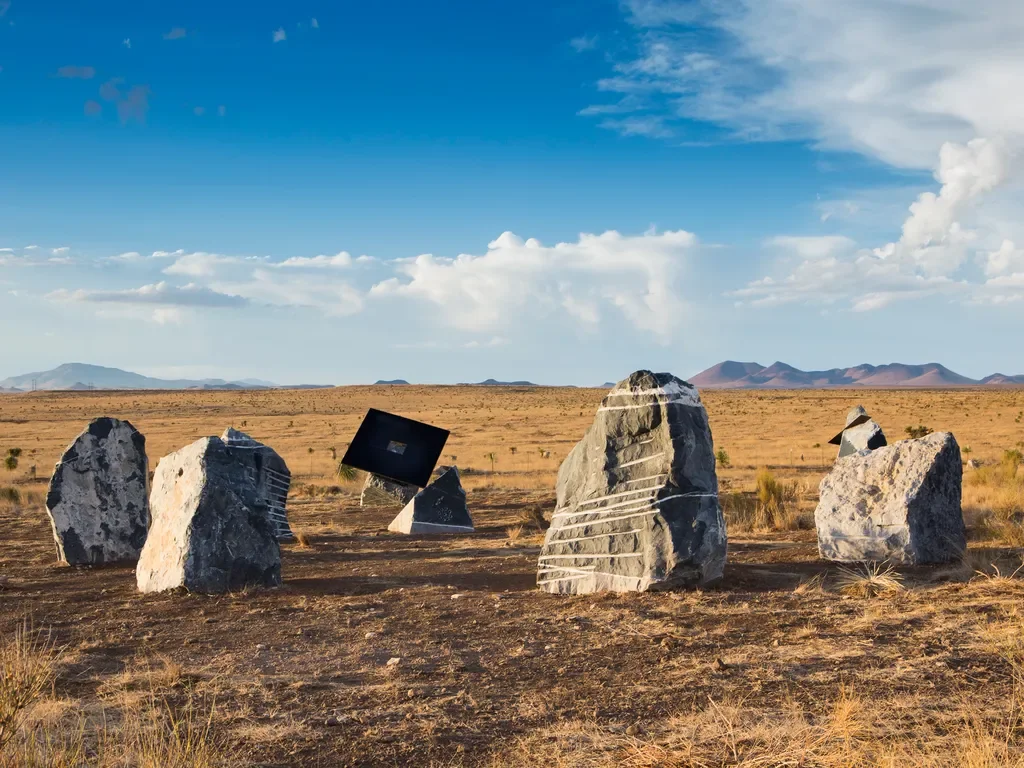
In 2018, Mirza unveiled Stone Circle, a large-scale outdoor sculpture commissioned by Ballroom Marfa in Texas, where it remained in the landscape for five years.
He also creates wall-based works that combine meteorites, gold leaf, LEDs, wires and magnets. These assemblages assign new functions to seemingly disparate materials and reveal their hidden properties.
Decaying into a Pair (Solar Powered LED Composition 40) is both an autonomous system mounted on a photovoltaic, or solar, panel and a contemporary interpretation of the classical landscape painting, with a clearly defined horizon and celestial bodies. By incorporating fragments of a meteorite into the work, Mirza gives the landscape a literally extraterrestrial dimension.
Haroon Mirza explores the possibility of bringing the visual and the auditory together in a single aesthetic experience, as the title also suggests. For him, hearing and listening are as fundamental to our perception of the world as looking and seeing. He therefore considers his works to be ‘compositions that unfold over time’, with each installation generating its own seemingly cyclical field of audiovisual noise.
Haroon Mirza

° 1977 in London, United Kingdom. Lives and works in London.
He received a bachelor’s degree in Painting from Winchester School of Art, followed by a master’s degree in Design Critical Practice and Theory from Goldsmiths College in 2006 and a master’s degree in Fine Art from Chelsea College of Art and Design in 2007.
Mirza is now one of the leading contemporary artists working at the intersection of visual art, sound, light and technology. In recent years, his work has been presented in numerous international solo exhibitions, including at Lisson Gallery in London (2023) and New York (2022); max goelitz in Berlin (2023) and Munich (2022); CCA Kitakyushu in Japan (2020); John Hansard Gallery in Southampton (2019); the Australian Centre for Contemporary Art in Melbourne (2019); Sifang Art Museum in Nanjing (2019); Ikon Gallery in Birmingham (2018); the Asian Art Museum in San Francisco (2018); Nikolaj Kunsthal in Copenhagen (2018); the Zabludowicz Collection in London (2017); Contemporary Art Gallery in Vancouver (2017); the Nam June Paik Art Center in Seoul (2015); Museum Tinguely in Basel (2015); and Museum Haus Konstruktiv in Zurich (2014).
He has also participated in many major international biennials and art events, including the Islamic Arts Biennale in Jeddah (2023), the Beijing Biennale (2022–2023), Noor Riyadh Festival (2022–2023), the Lille3000 Triennale (2022), the Lofoten International Art Festival in Norway (2022), the Thailand Biennale (2021), the Liverpool Biennial (2021), the Dhaka Art Summit (2018 and 2020), Sharjah Biennial 11 (2013), the Shenzhen Sculpture Biennale (2012) and the 54th Venice Biennale (2011), where he was awarded the prestigious Silver Lion.
His innovative artistic practice has received numerous international distinctions, including the Northern Art Prize (2011), the DAIWA Foundation Art Prize (2012), the Zurich Art Prize (2013), the Nam June Paik Art Center Prize (2014), the Calder Art Prize (2015) and the COLLIDE International Award (2017). The latter led to a two-month residency at CERN in Switzerland in 2018, where he researched the relationship between art and fundamental science.
That same year, Mirza created Stone Circle, a monumental outdoor sculpture commissioned by Ballroom Marfa in Texas. The work remained integrated into the Texan landscape for five years and is a compelling example of his ongoing exploration of the interaction between technology, natural energy sources and the experience of space, light and sound.
Artist Talk
Portfolio