McArthur Binion
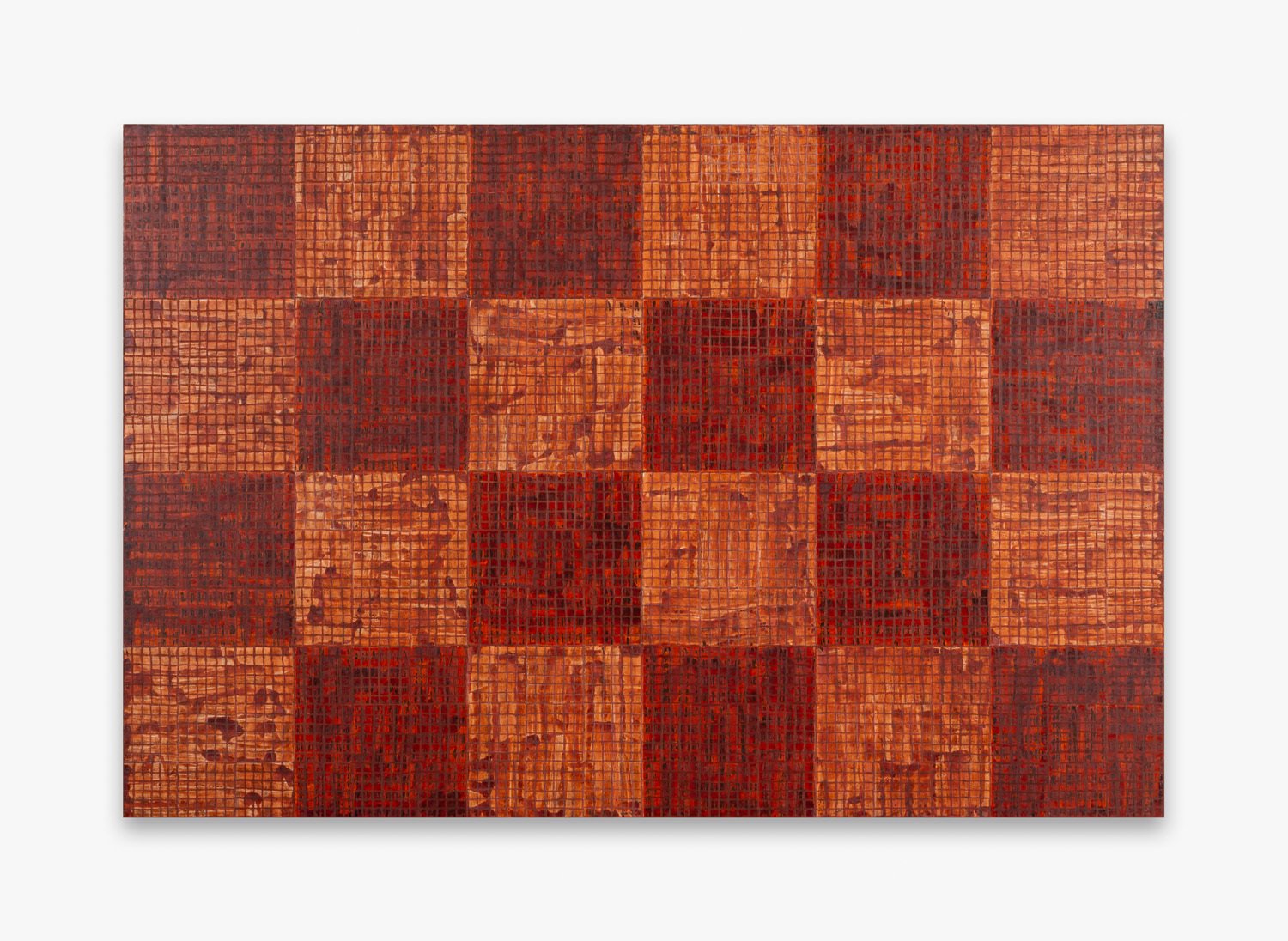
Route One: Box Two: VI, 2016Graphite and paper on wood182.9 x 243.8 cm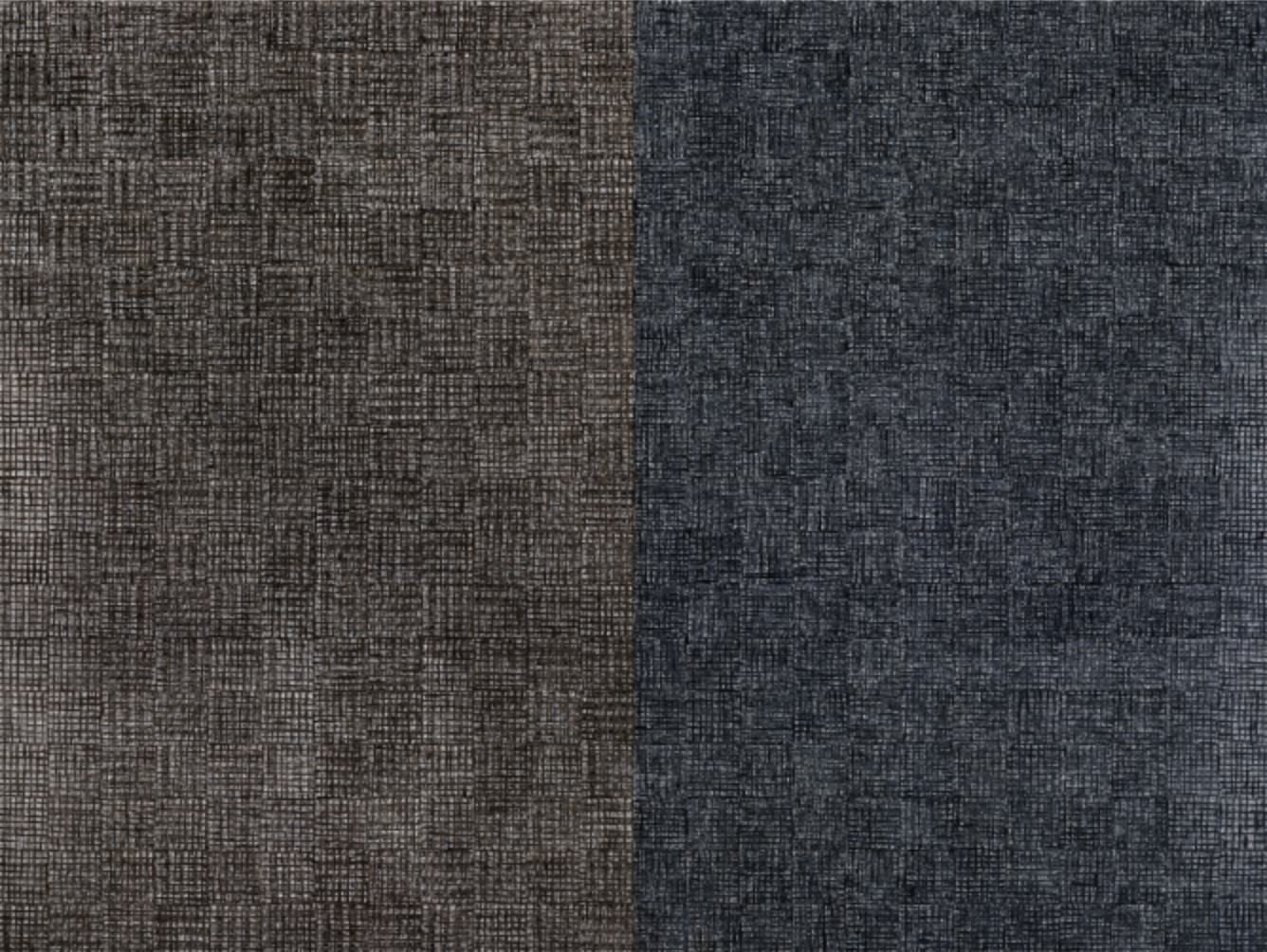
About the work
McArthur Binion belongs to a generation of artists who only achieved international recognition later in life.
Binion’s painting draws on the formal language of Minimal Art, with the grid as its fundamental organising principle. Unlike many Minimalist artists, who used industrially manufactured materials, Binion emphasises the importance of the artist’s hand.
Each work is constructed by hand from thousands of carefully applied horizontal and vertical graphite strokes. In this way, he combines the formal rigour of Minimalism with a distinctly personal and physical painting practice.
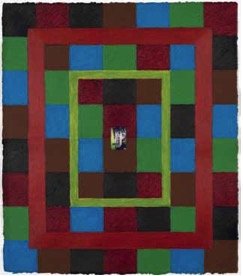
His interest in repetition and serial structures connects him to artists such as Sol LeWitt and Andy Warhol, while his use of the grid also shows an affinity with the work of Jasper Johns. The woven structure and repetitive pattern also refer to the tradition of African American quilts, an important source of cultural and familial inspiration.
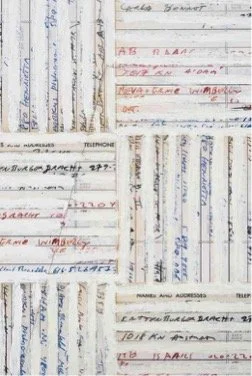
This work is part of the DNA Series, in which Binion inseparably connects abstraction and autobiography. At first glance, the painting appears to be a strictly geometric grid. On closer inspection, personal documents can be seen beneath the layers of graphite: copies of his birth certificate, pages from old address books, photographs of his childhood home and early self-portraits. The abstract composition thus acts as a veil through which the artist’s personal history remains visible.
The work creates a tension between Minimalist abstraction, intensive manual labour and autobiographical memory. The woven structure evokes not only quilts but also agricultural plots and cotton fields, through which Binion refers to the history of African American labour and his family’s experiences.
For Binion, Modernism is not an end in itself, but a framework in which he can anchor his own life story. The formal language of Minimalism thus becomes a vehicle for memory, identity and heritage.
His friendships with innovative jazz musicians such as John Coltrane, Ornette Coleman and Cecil Taylor—whose album Unit Structures was an important source of inspiration—also resonate in the rhythmic character of his paintings.
McArthur Binion

° 1946 in Macon, Mississippi, United States. Lives and works in Chicago.
McArthur Binion belongs to a generation of artists who only achieved international recognition later in life. He grew up in Detroit as one of eleven children and, in 1973, became the first African American artist to graduate from the prestigious Cranbrook Academy of Art. After moving to New York, he became friends with Minimalist artists such as Sol LeWitt and Carl Andre, who supported his artistic development. He later settled in Chicago once again.
For many years, Binion’s work was collected primarily by American museums and private collectors, including the Metropolitan Museum of Art in New York and the Smithsonian National Museum of African American History and Culture in Washington, D.C.
His international breakthrough came with his participation in the 2017 Venice Biennale. Since then, his work has been shown at Galerie Lelong in New York and Paris, Kavi Gupta in Chicago and Berlin, and Xavier Hufkens in Brussels, among others.
Artist Talk
Portfolio