Sara Sze
Light Gray Stone, 2013-2015Screenprint on canvas, photograph of a rock on Tyvek and aluminium
163 x 117 cm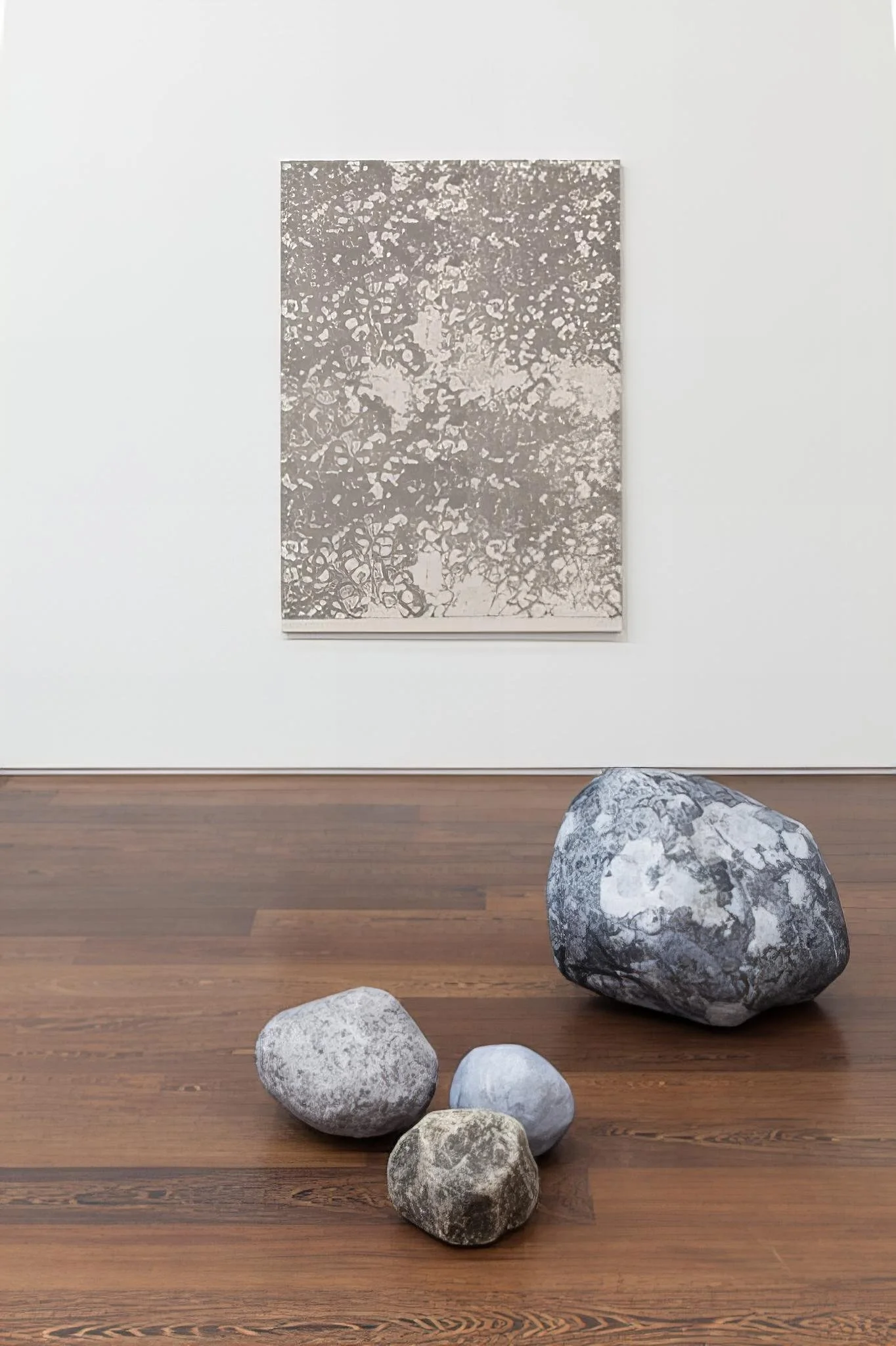
About the work
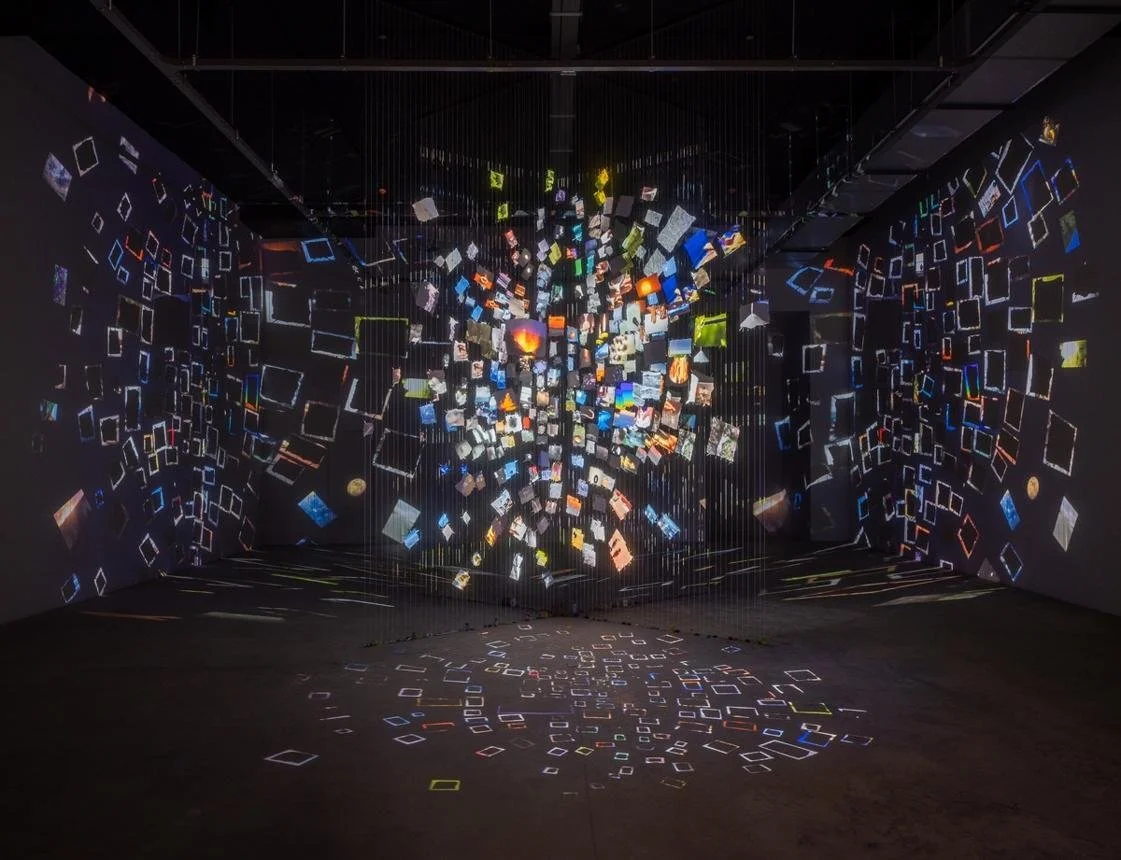
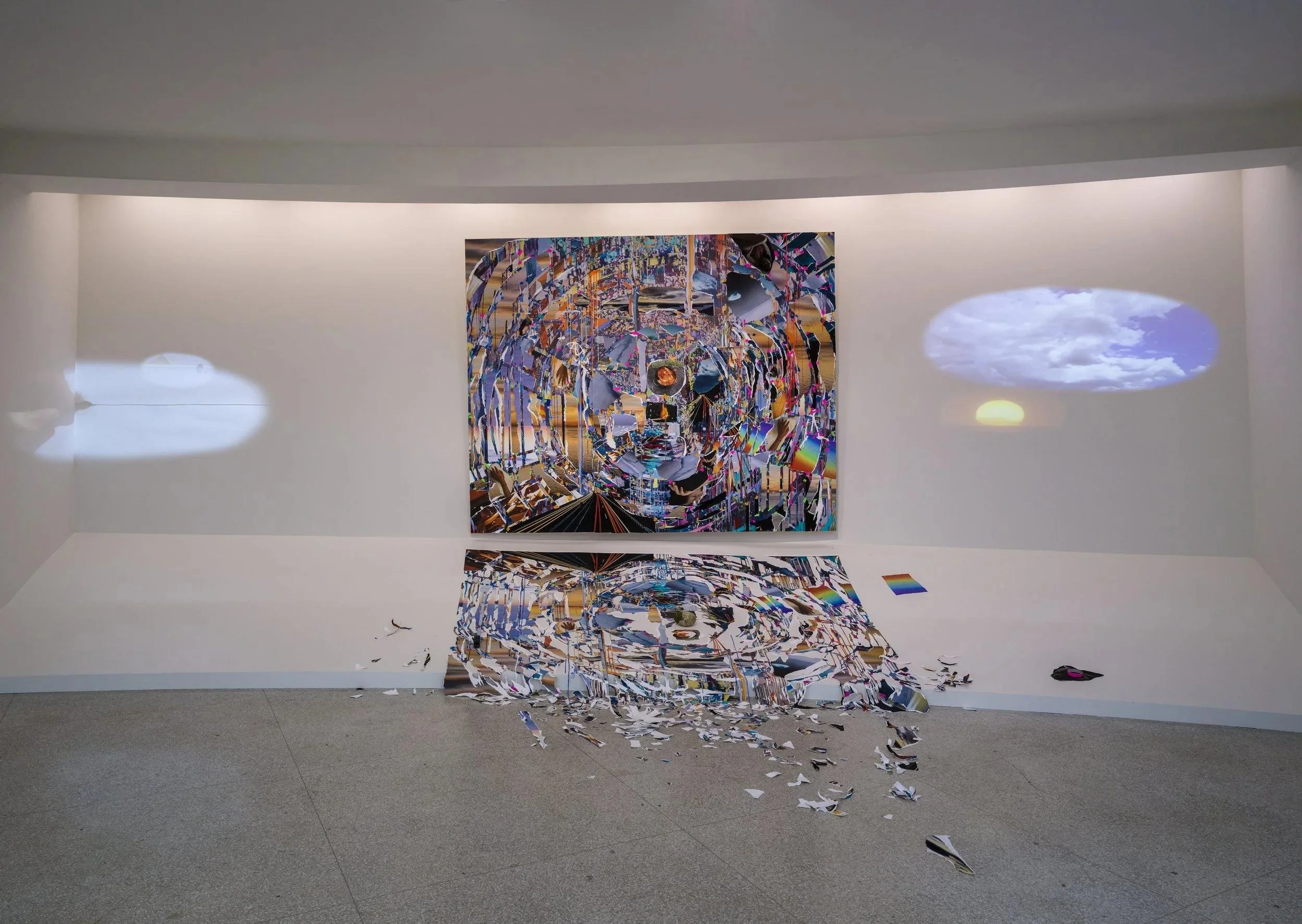
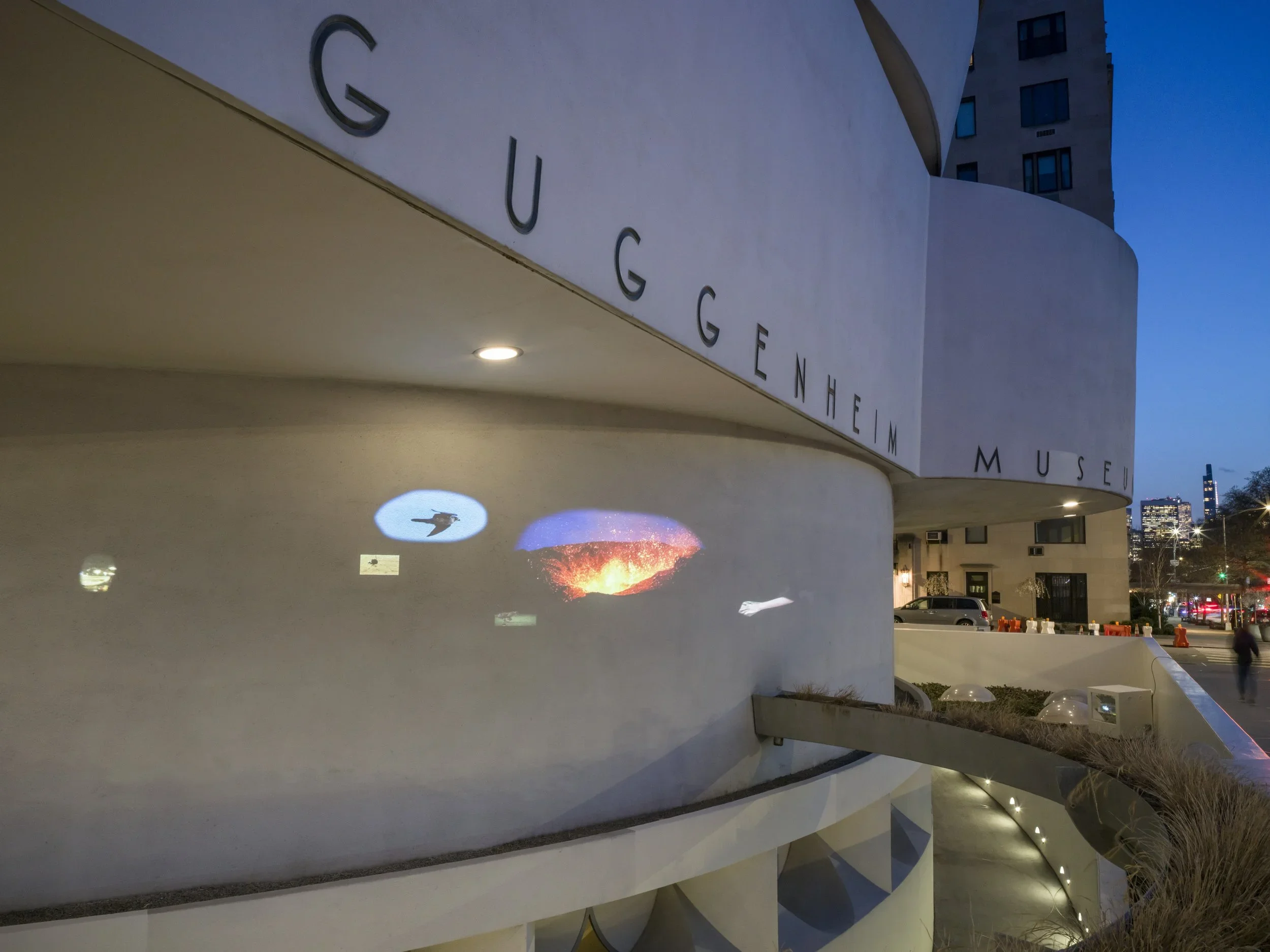
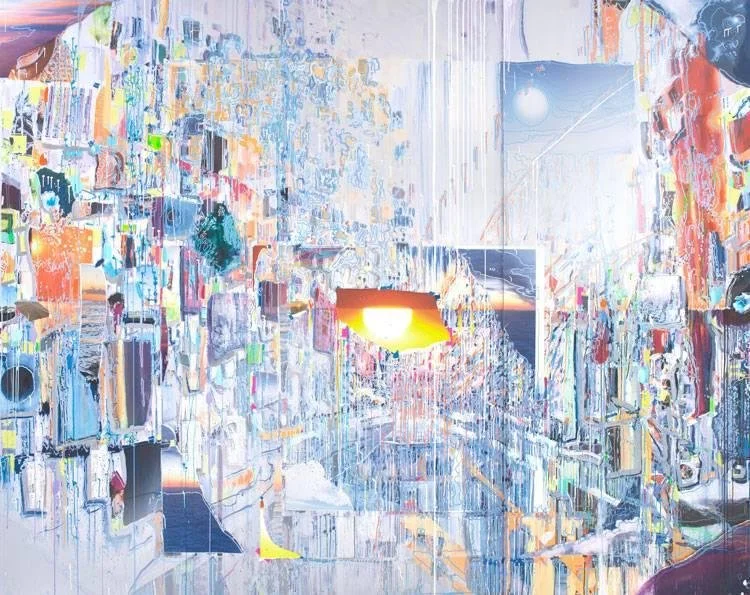
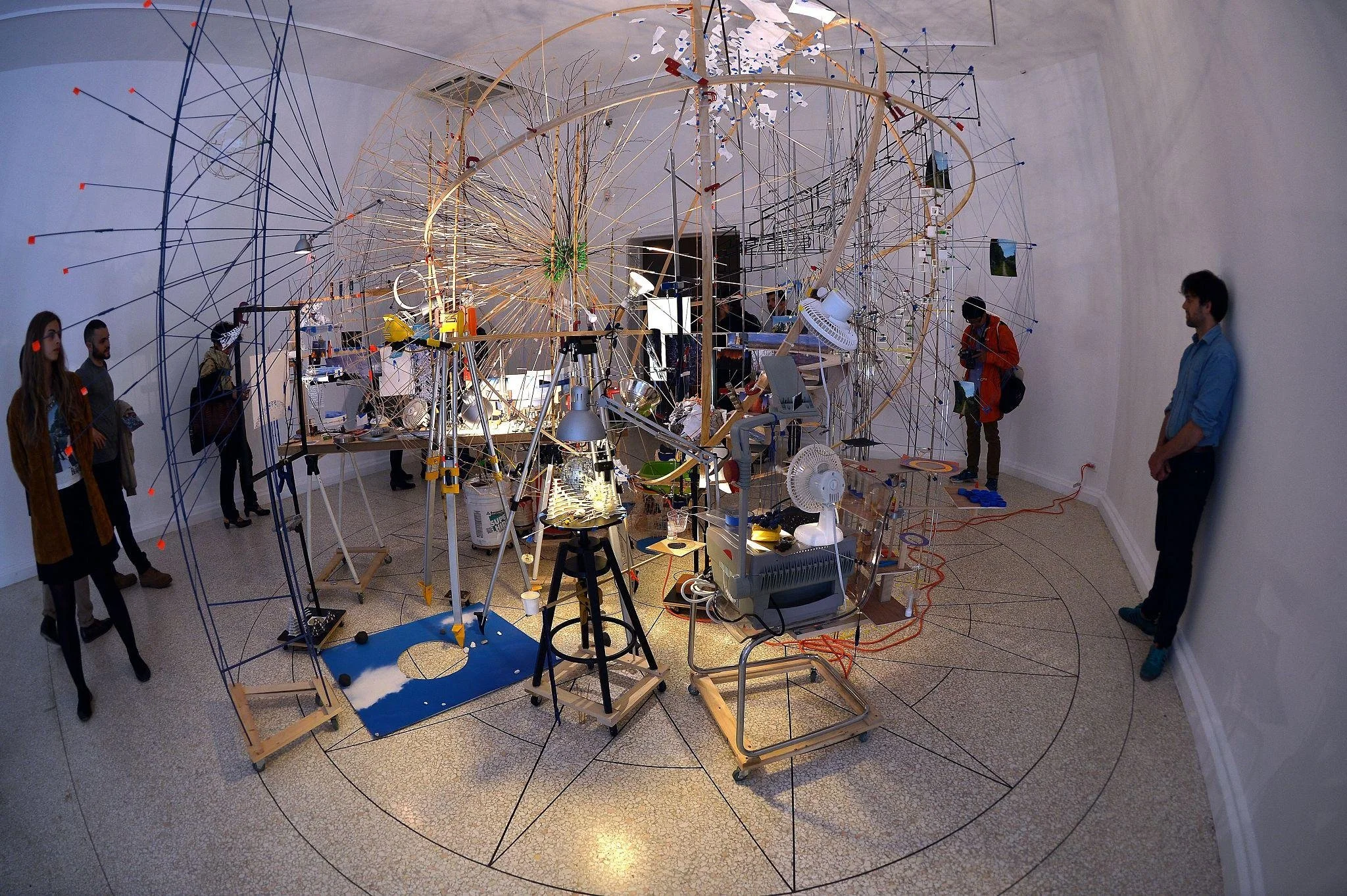
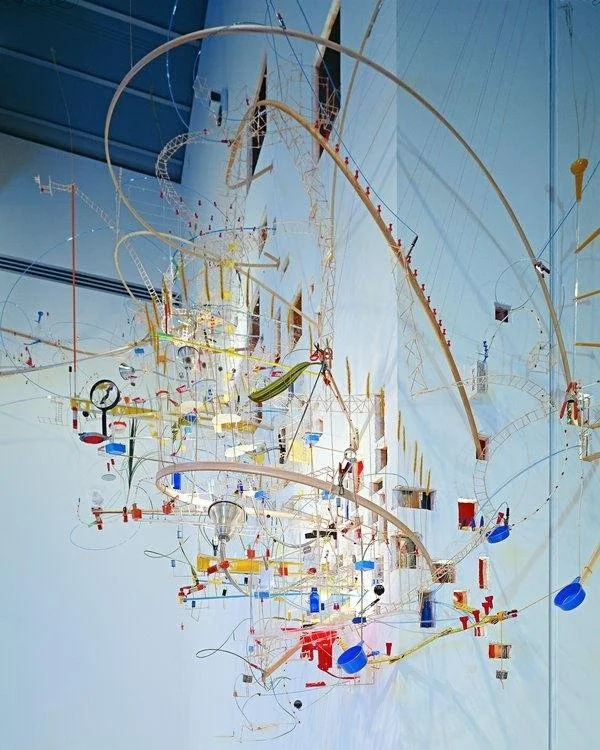
Sarah Sze is one of the most influential installation artists of her generation. Her oeuvre has evolved from fragile architectural installations made with everyday objects to monumental multimedia installations in which sculpture, video, photography, painting and digital imagery merge.
Themes such as time, memory, information, nature, technology, chaos and order recur throughout her career.
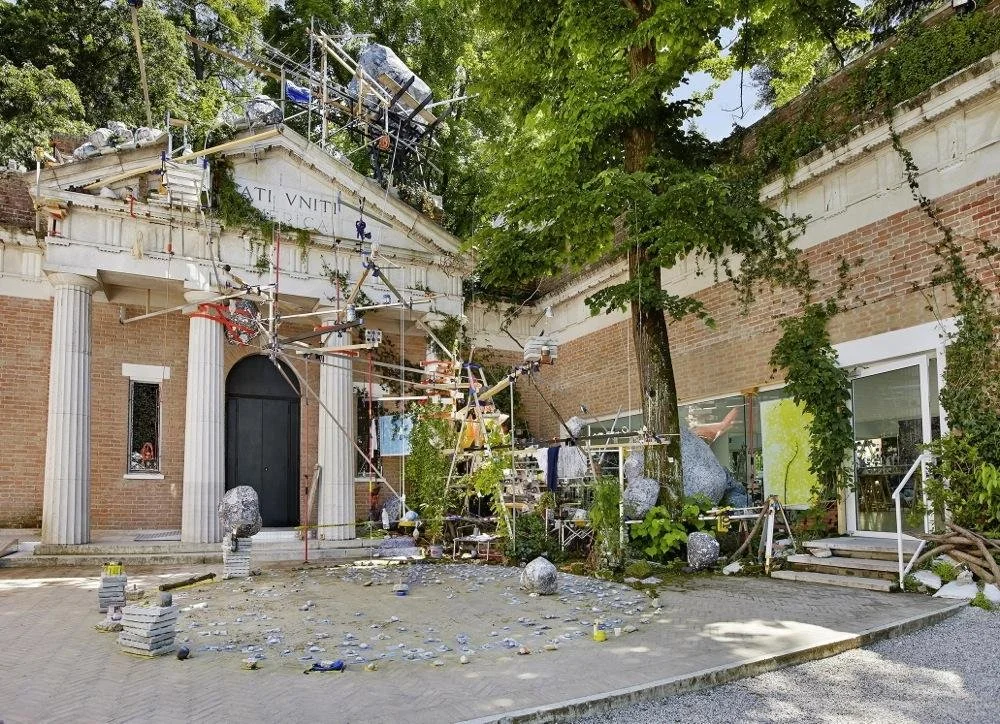
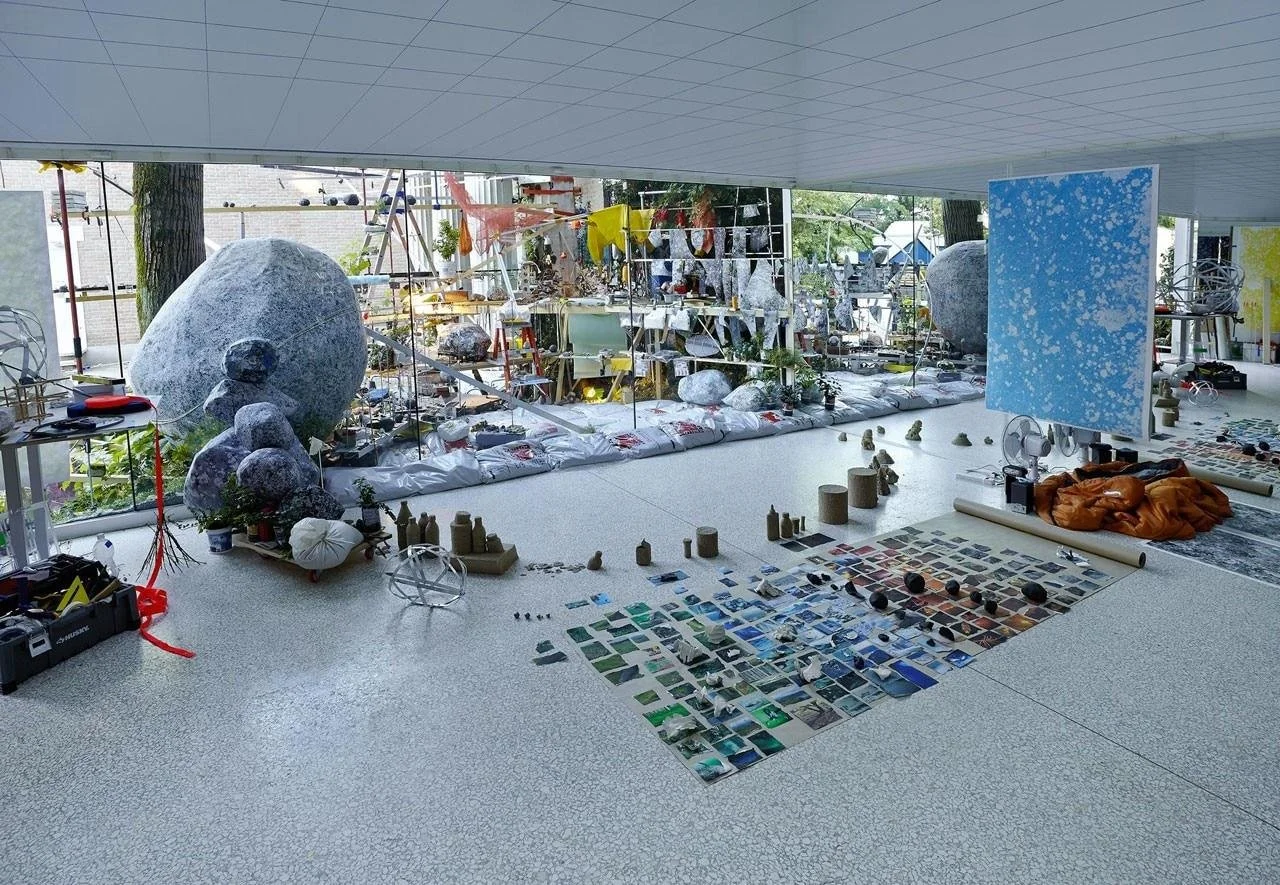
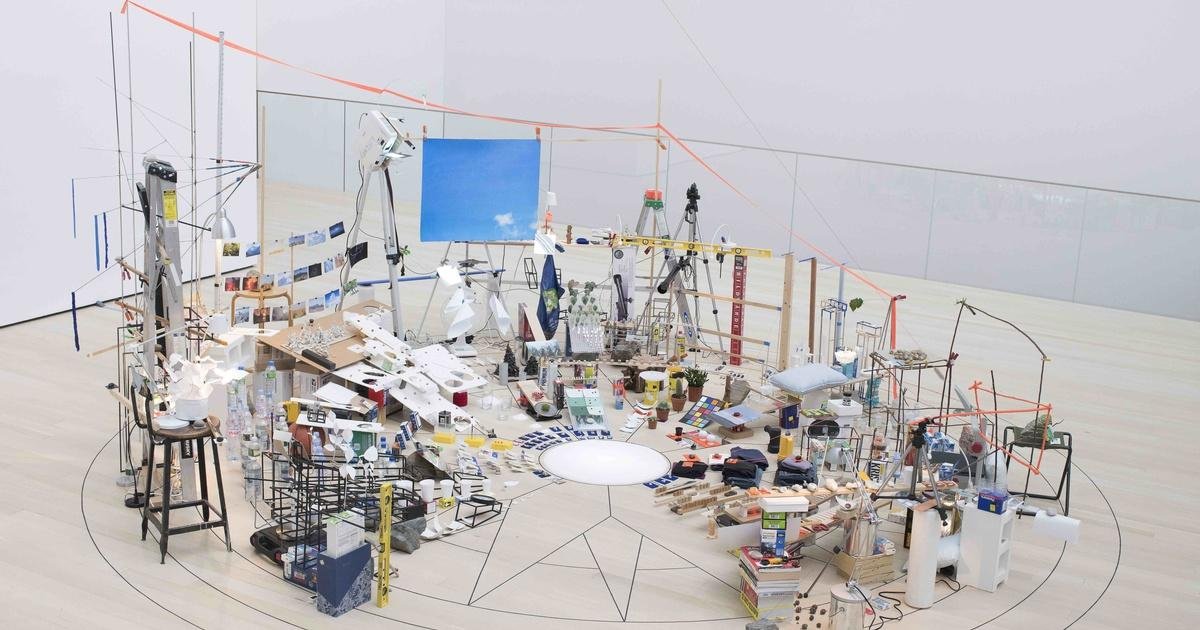
Light Gray Stone consists of a grey screenprint depicting the surface of a rock, combined with four carefully arranged stones. The work refers to Triple Point, the installation with which Sarah Sze represented the United States at the 2013 Venice Biennale.
The title refers to the triple point in thermodynamics: the unique point at which temperature and pressure coincide in such a way that the three states of matter—gas, liquid and solid—exist simultaneously in equilibrium. The work also refers to trigonometry, in which a point in space is precisely located. Both scientific principles symbolise the fragile balance between order and chaos and reflect the fundamental human desire to create stability in a constantly changing world.
Light Gray Stone is part of a series of thirteen screenprinted works in which Sarah Sze explores the full palette of toners used by contemporary printers. By reproducing a natural motif—the surface of a rock—through industrial printing techniques, she questions the relationship between nature, technology and the ways in which images are produced and perceived.
As early as 2005, Richard Serra praised Sze for fundamentally expanding the possibilities of sculpture. He admired her ability to approach space and location in an entirely new way and emphasised that the wide variety of materials never demands attention for its own sake. According to Serra, her work transcends the traditional boundaries between sculpture, painting and architecture. He compared her to Cy Twombly and Jackson Pollock because of her bold use of colour, refined sense of line and exceptional ability to bring individual elements together into a powerful spatial whole in which architecture itself becomes an integral part of the work.
‘I hadn’t seen anyone deal with place and location in that way. She seems fearless with the variety of materials she uses, but when I look at her work I don’t get hung up on how it was made.’ He compared her to the giants of American Abstract Expressionism: ‘So much sculpture right now comes out of bad painting, and out of collage. But this was like seeing Twombly and Pollock in space. There’s a particular sensibility, a bravery of color, a sensitivity to line. She creates a relationship of the part to the whole that’s very, very impressive. Here we have a woman who’s figured out a way to make architecture part of the whole.’
Sara Sze

° 1969 in Boston, United States. Lives and works in New York.
In 1991, she received a bachelor’s degree in architecture and painting from Yale University. She subsequently graduated with a Master of Fine Arts from the School of Visual Arts in New York in 1997.
While still completing her master’s degree, Sze began to challenge the traditional boundaries of sculpture. For an exhibition at MoMA PS1 in New York, she intervened directly in the building’s architecture by creating openings in the walls and constructing sculptural passageways and fragile ecosystems that completely transformed the space.
A year later, she presented her first solo museum exhibition at the Museum of Contemporary Art Chicago. There she showed Many a Slip (1999), an immersive installation extending across several galleries. Flickering video projections were interwoven with complex assemblages of everyday objects. With this work, Sze introduced video as an artistic medium for the first time, and it has remained an essential component of her installations ever since.
Inspired by the Russian Constructivist concept of the ‘kiosk’, Sze considers her installations to be mobile nodes where images, objects and information constantly interact. Her works function as dynamic networks in which order and chaos, the analogue and the digital, and the natural and the artificial continually intersect.
Sze quickly gained international recognition. Her work was included in the 48th Venice Biennale and the Carnegie International (1999), the Whitney Biennial (2000) and the São Paulo Biennial (2002). In 2003, she received the prestigious MacArthur Fellowship, an award presented to exceptionally innovative artists and scientists.
Artist Talk
Portfolio